
Partnership expands recycled pulp use in viscose production
A new agreement expands access to recycled pulp for viscose filament manufacturing in China. The innovator in textile recycling Circ LLC, Danville, VA/USA, has entered into a partnership with Xinxiang Bailu Chemical Fiber Co., Ltd., a producer of viscose filament and a Canopy Dark Green Shirt company.
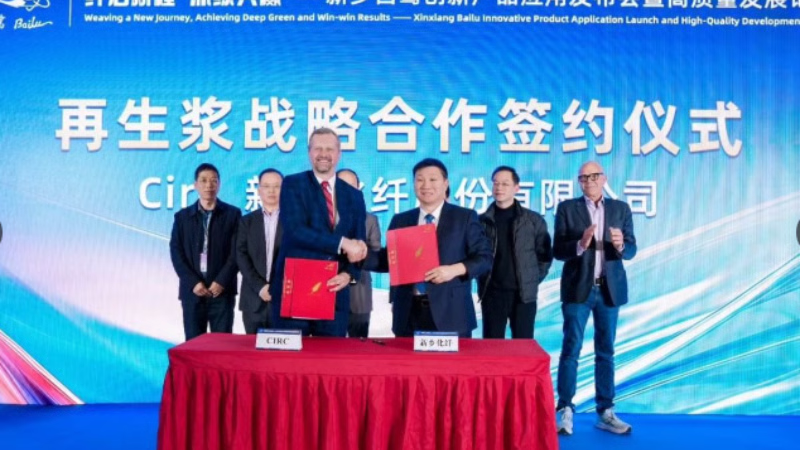
The collaboration strengthens the company’s network of fiber manufacturing partners and supports the commercial adoption of recycled pulp within established textile supply chains.
Under the agreement, Xinxiang Bailu Chemical Fiber Co., Ltd., Xinxiang/China, will procure recycled pulp produced with Circ’s patented textile-to-textile recycling technology for use in commercial-grade viscose filament production. The Chinese manufacturer will act as a commercial partner, producing viscose filament with recycled content for global brands and mills.
Circ’s patented technology enables the recycling of polycotton blends, separating polyester and cellulose to create materials comparable to virgin fibers. This agreement marks a significant step in commercializing recycled-content fibers and meeting sustainability goals for the global fashion sector.
Xinxiang Bailu Investment Group was founded in 1960. Its core subsidiary, Xinxiang Chemical Fiber Co., Ltd., was listed on the Shenzhen Stock Exchange on October 21, 1999. The company manufactures more than 10 product categories, including viscose filament and elastane, and reports having the world’s largest viscose filament production capacity. By validating recycled pulp for large-scale filament production, the cooperation supports a closed-loop approach in the textile sector and aims to reduce reliance on virgin raw materials while lowering the carbon footprint associated with fiber production.
Do you have questions or comments about this article?
Send an email to the editorial team.
Contact content.syndication@dfv.de if you would like to acquire the usage rights to this article.